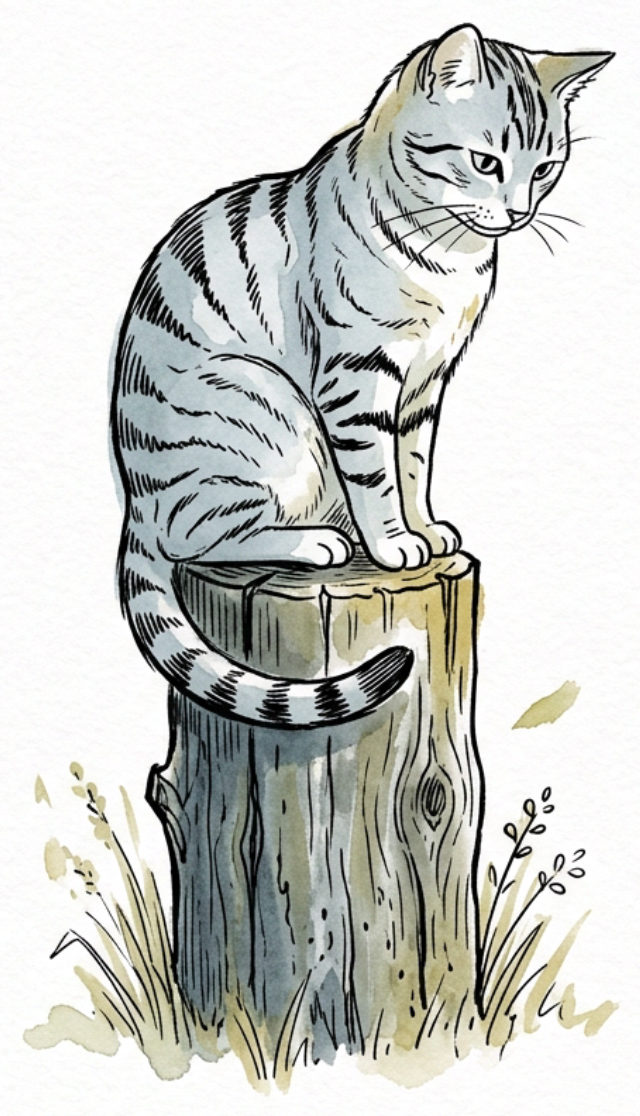
Cats always land on their feet.
for grown-ups
What's actually true
Usually, not always. A falling cat twists in the air to turn its feet toward the ground: the "righting reflex". It uses its inner ear and a very bendy backbone. Kittens start doing it at about three weeks old and have mostly mastered it by about seven weeks. But vets treat cats hurt in falls, including some that did land on their feet, and a short fall can be too quick for a cat to turn.
The round's real subject is the word always. A child who agrees isn't wrong about cats; they're over-sure about the word.
Sources: Purina Canada, "Why do cats land on their feet", backed by Sechzer et al. 1984 (Experimental Neurology); The Animal Medical Center, New York, "High Rise Syndrome in Cats". You may read that cats falling from higher floors are hurt less. That claim is disputed (cats that die are rarely brought to a vet), so the round leaves it out.
What kids usually bring
- "I've seen a cat land on its feet." A real observation, and most cats do. The round notes the gap between "most" and "always".
- "Cats have nine lives." A saying. Fun, and not about real cats.
- "Cats can twist round in the air." True: it's the righting reflex itself.
- "Nothing ALWAYS happens." The best one: it's about the word, not the cat.
At dinner
Ask: "What's something that ALWAYS happens? Are you sure it's always?"
Then the one rule: say their reason back before you give yours.
The round never tells your child the answer. This card does, so you're never caught out. If your child wants to argue with it, that is the point.