For grown-ups
what it teaches, how to play it, and a card for every expedition
What it teaches
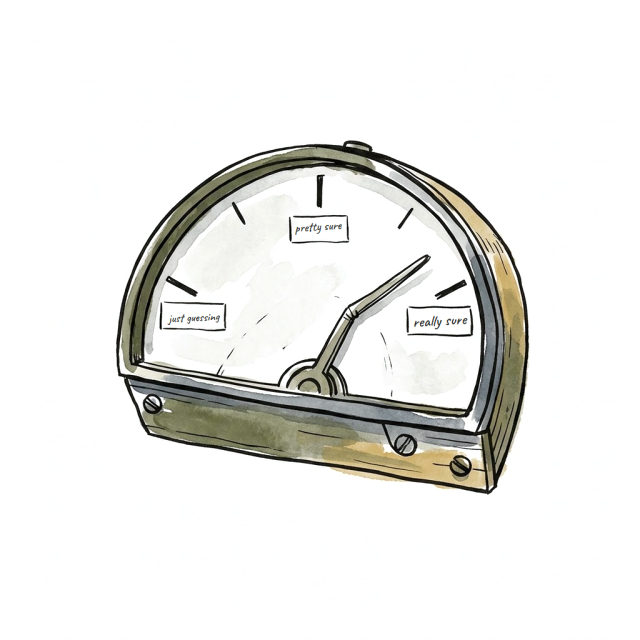
Curious Kea is an interactive story about how we know things: what do I think, where did that come from, how sure am I, how would I find out, and what would change my mind. Not a list of facts to remember, though children pick up plenty along the way (why seasons happen, how a footprint can be a witness, how a boulder ends up under the wrong mountain). The facts are the scenery, and the habit is the point.
Each expedition walks the same loop in story: claim, where-from, Sure-o-Meter, predict-then-check, update, Wonder Log. Kea's theories are wrong in entertaining ways, Rock keeps records and only ever reports what it saw, and your child adjudicates. Nobody in the story is an oracle. Every character has a source, not an authority, and the crew compares sources ("she saw it; he was told; I guessed") rather than status.
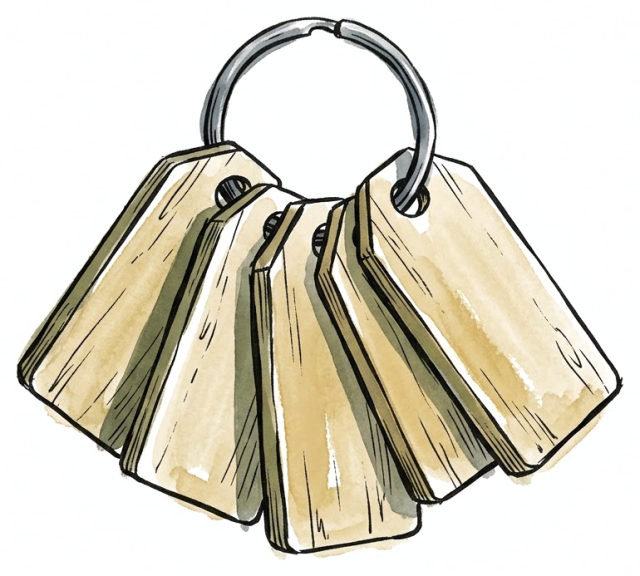
These are the five patches a child can earn, and the whole reward system:
- Said "I'm Not Sure"
- Asked a Great Question
- Checked It Myself
- Caught a Mistake
- Changed My Mind
They reward the moves rather than being right first, and changing your answer after the evidence actually earns more than being right straight away. Sticking to your theory after the evidence is allowed too:
You may keep the theory. The evidence stays too.
Rock, every expedition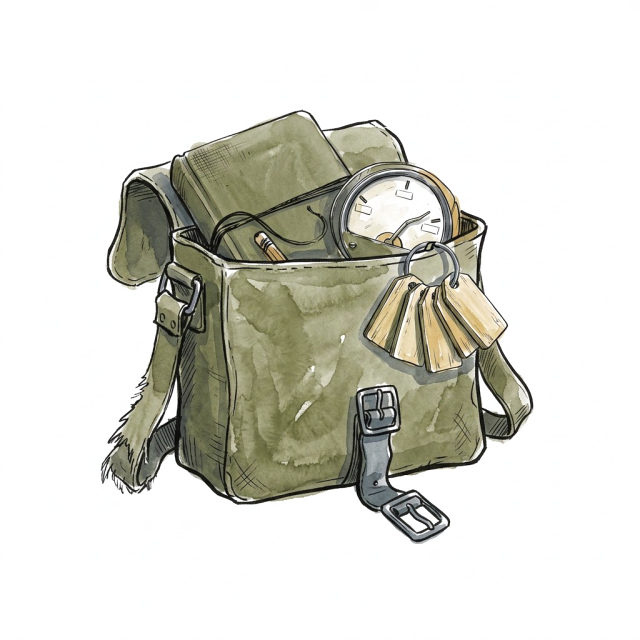
How to play it with a child
 Ages. It is written for 7 to 10, and it holds up
fine above that.
Two trails, chosen in the app's settings: the main
trail (the whole story) and the high route
(the same story with a few extra beats for careful older thinkers:
layers in mud, a direction from a scratch, saying a rough number
honestly). Nothing in the app mentions ages.
Ages. It is written for 7 to 10, and it holds up
fine above that.
Two trails, chosen in the app's settings: the main
trail (the whole story) and the high route
(the same story with a few extra beats for careful older thinkers:
layers in mud, a direction from a scratch, saying a rough number
honestly). Nothing in the app mentions ages.- Time. Twelve to twenty minutes an expedition, in three or four scenes. The app saves at every scene break, so stopping halfway is fine: every episode has a deliberate pause in the middle, a natural "more tomorrow".
- Reading. The words write themselves out at reading pace and wait for the reader; a tap finishes a line early, and holding a finger on the page hurries the writing along. A confident six-year-old manages the main trail; a slower reader will want you beside them for the first one.
- Together or alone. Both work, though together is better the first time. It is closer to an interactive book than a video game: read it together the way you would a chapter book, and the choices are made to be talked about, and the best moments are when a child argues with Kea.
- Afterwards. Every card below ends with a home experiment (nothing you need to buy) and two or three questions to talk about. The Wonder Log in the app keeps a page from every finished expedition, in the child's own choices.
What it will never do
- no ads
- no accounts
- nothing collected
- no chat
- works offline
Progress, patches and the Wonder Log live on your device and never leave it. Moving to a new device is a "pack up" and "unpack" of one file, and the file goes only where you put it. The privacy page says the rest in plain words.
The expeditions
One card per expedition: what happens (with spoilers), the thinking your child practised, words they may come home saying, the home experiment, and what to talk about afterwards. Printable.
First Expedition
- Kea & Rock and the Hungry Wind
Kea's buried snack is gone. Kea blames the wind. How would anyone check on a wind?
play for grown-ups
The Past
- Kea & Rock and the Giant Chicken
A footprint bigger than Kea, in mud gone hard. Nothing that made it has ever been seen alive. So what did?
play for grown-ups - Kea & Rock and the Bones Nobody Saw
Bones older than Rock, and nobody ever saw the animal. Not even Rock. Now what?
play for grown-ups
Rock's Origin
- Kea & Rock and the Missing Glacier
Rock doesn't match the mountain it sits under. And Rock can't remember arriving.
play for grown-ups - Kea & Rock and the Slow Clock
How long has Rock sat in this valley? Nobody was counting. Some things count by themselves.
play for grown-ups
Weather
- Kea & Rock and the Certain Sky
Kea can always tell tomorrow's sky. Just ask Kea. Rock, meanwhile, kept a tally.
play for grown-ups
Seasons
- Kea & Rock and the Drifting Sun
The coldest morning yet. Kea says the sun itself is drifting away. How would anyone check on the sun?
play for grown-ups - Kea & Rock and the Leaning World
Winter keeps coming back. On time. Kea wants to know what winds it up.
play for grown-ups
Questions, corrections, ideas
Write to [email protected]. If a card gets a fact wrong, that is exactly the kind of thing the crew would want to know.