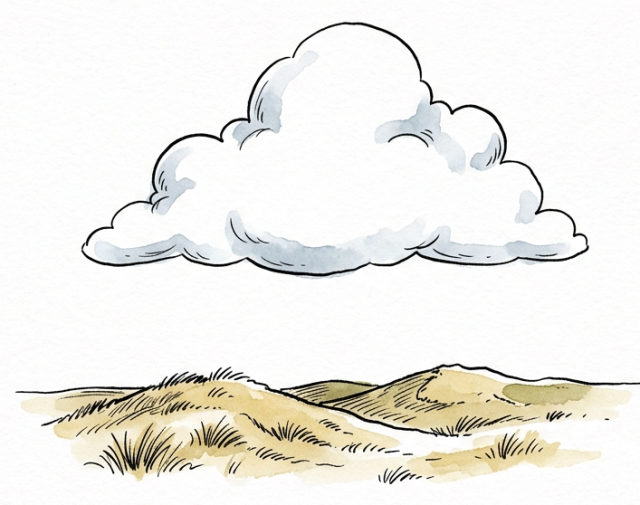
Clouds are soft like cotton wool.
for grown-ups
What we actually know
Clouds look soft, but there's nothing soft to touch. A cloud is countless tiny drops of water (or bits of ice) floating in the air. They form when water vapour condenses onto tiny specks of dust or sea salt. Fog is the same thing at ground level, so anyone who has walked through fog has been inside a cloud: it feels wet and cool, and you walk straight through it. Planes fly through clouds, and trampers in the New Zealand hills often walk through them.
The round's real subject is looking versus touching. A child who agrees has seen something real: clouds do look like cotton wool from far away. What you see from far away and what you find when you're inside a thing can be different.
Sources: UK Met Office, "Fog" ("Fog is essentially a cloud at ground level"), metoffice.gov.uk/learning/fog; Royal Meteorological Society, "What's the difference between fog and mist?" ("In simple terms, fog is cloud at ground level"), rmets.org/metmatters/fog-mist-difference. You may read that a cloud weighs as much as a hundred elephants. That's a rough estimate we didn't trace to a source, so the round leaves it out.
What kids usually bring
- "They look fluffy, like cotton wool." A real observation, from far away. In the round, Kea says it too, and Rock points out that seeing isn't touching.
- "In cartoons, people sit on clouds." A picture, not a cloud. The round answers it with planes, which fly right through.
- "They float, so they must be light and fluffy." Sensible: they do float. But tiny drops of water float too, and light isn't the same as soft.
- "I've been in fog. It felt wet, not soft." The best one. It's the child's own experience, and the round asks: if fog is a cloud, have you been inside one?
- "Rain comes out of clouds. So they're wet." A good link: the record says clouds are made of tiny drops of water.
At dinner
Ask: "Have you ever been inside a cloud?" Then, the next foggy morning, go outside together and stand in one.
Then the one rule: say their reason back before you give yours.
The round never tells your child what to think. This card tells you what we know, so you're never caught out. If your child wants to argue with it, that is the point.