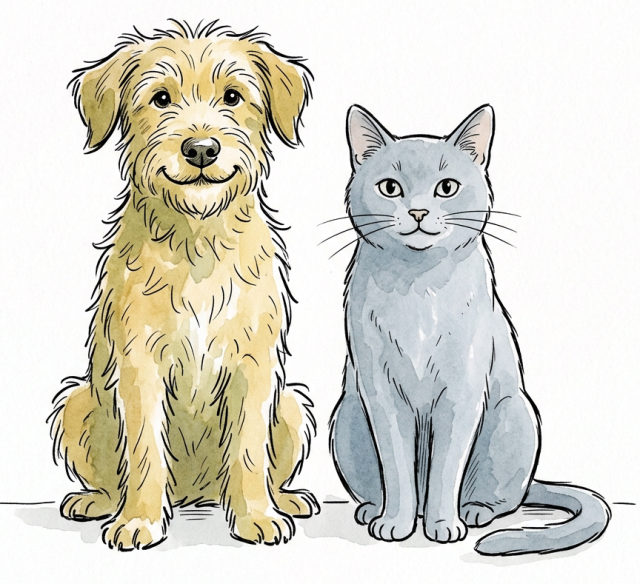
Dogs are better than cats.
for grown-ups
What we actually know
There's nothing to find here, and that's the lesson. This is a taste: no study measures "better", and nobody has to move. What you can check is "better at" something: better at fetching, at climbing, at sitting still. The round's move is the question "better at what?", which splits a fierce taste into parts. Then people who love dogs and people who love cats can each say what the other animal is better at, and still keep their own answer.
The round leaves out facts that sound like they settle it, such as which animal is "smarter" or which was tamed first. They answer a different question, and they don't change what anyone likes.
What kids usually bring
- "Dogs play with you." A taste, from their own time with dogs. Kea agrees, loudly.
- "Dogs can learn tricks." The round turns it into a "better at" question: can cats learn tricks too? It leaves that as a question, not an answer. It's a good one to look up together.
- "Cats are calm and soft" or "cats look after themselves." Tastes too. The Duck adds another: for a duck, the one that stays on the bank is better. Better depends on who's asking.
- "Dogs need a walk every day." A reason about work, not about liking. It's a real reason: for that child, better means easy to look after.
Children often hold this one hard. The round asks them to say the other side back fairly before they answer it, which is the point.
At dinner
Ask: "Dogs or cats? Better at what?"
Then the one rule: say their reason back before you give yours.
The round never tells your child what to think. This card tells you what we know, so you're never caught out. If your child wants to argue with it, that is the point.