Winter is cold because the sun is further away.
for grown-ups
What's actually true
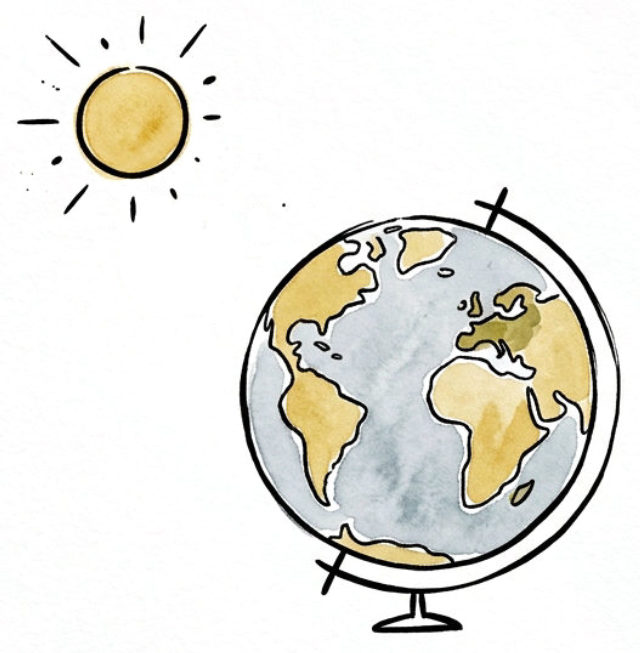
No. Earth is actually closest to the sun in early January (about 147 million km) and farthest in early July (about 152 million km). In New Zealand, January is summer, which can look like proof of the claim. The test that settles it: on that same January day it's winter in England and Canada. Same sun, same distance, opposite seasons.
The real cause is Earth's tilt. When your half of the world leans toward the sun, sunlight hits it more directly and the days are longer: summer. When it leans away: winter. The change in distance through the year is small and, in NASA's words, "does not make much difference to our weather".
Source: NASA Space Place, "What causes the seasons?" (spaceplace.nasa.gov/seasons).
What kids usually bring
- "The sun looks lower and weaker in winter." A true observation, and a clue: that's the tilt at work, not distance.
- "Things further from a fire are colder." True for fires, which is why the claim feels right. The January fact is the surprise.
- "When it's winter here, it's summer somewhere else." The Whale's reason, and the decisive one.
- "The sun is up for less time in winter." True, and also the tilt.
Kea's "drifting sun" theory makes a cameo.
At dinner
Ask: "If we're closest to the sun in January, why is it winter in England then?"
Then the one rule: say their reason back before you give yours.
The round never tells your child the answer. This card does, so you're never caught out. If your child wants to argue with it, that is the point.