If you feel really sure, you must be right.
for grown-ups
What we actually know
No. Being sure is a feeling, and it feels the same whether you are right or wrong. Kea is certain where she buried her snack, digs by the big rock, and finds nothing. Rock saw it buried under the fern.
A child who agrees has met something real: when you are sure, you are often right, and the round says so. What it adds is that sure and checked is the good kind.
The round's record is a classic memory study. People see coins every day, but when researchers asked them to draw a penny from memory, almost nobody got every part right. Only one person did, and they were a coin collector. Nickerson and Adams published it in 1979. Their finding is that we remember the details of a familiar thing only as far as they are useful to us day to day.
Sources: Nickerson, R. S. and Adams, M. J. (1979), "Long-term memory for a common object", Cognitive Psychology 11, 287-307. The round doesn't say how many people took part or how sure they were: those figures were not checked against the paper. A better-known study of students' memories of a famous news event was left out, because its subject is upsetting and its figures were only found second-hand.
What kids usually bring
- "When I'm sure, I'm usually right." Often true, and the round says so. The question is what to do the one time you aren't.
- "Why would I feel sure if I wasn't right?" A real puzzle. Feeling sure is a feeling, and it can be just as strong when we are wrong.
- "Someone told me to trust what I know." Fine advice for things you have checked. The round asks: have you?
- "Two people can be sure of opposite things." A clean argument, which works straight away.
- "I've been really sure and wrong." The best card of all, and honestly come by.
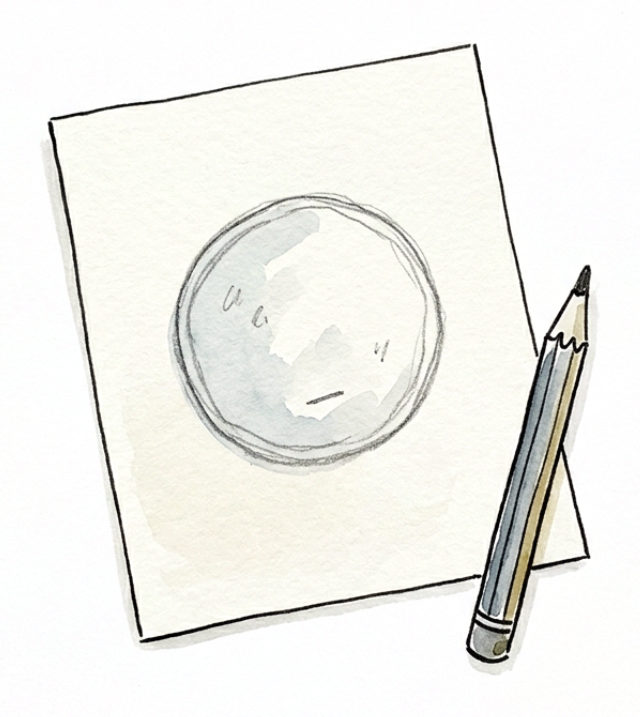
The round also asks your child to draw a coin from memory, say how sure they are, then fetch a real coin and look. Whatever they report is welcome, including "I didn't try it". Trying it is the point.
At dinner
Try the coin test together. Each of you draws the side of a coin you use a lot, from memory, with no peeking. Rate how sure you are, from "really" to "not at all". Then lay a real coin beside each drawing.
Ask: "Who was surest? Who was rightest? Were they the same person?" Don't turn it into a contest. The aim is to notice that the feeling and the facts can come apart.
Then the one rule: say their reason back before you give yours.
The round never tells your child what to think. This card tells you what we know, so you're never caught out. If your child wants to argue with it, that is the point.