Feathers in the snow
for grown-ups
What's going on
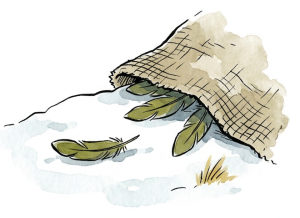
60 feathers, but not spread evenly: the top half holds twice as many as the bottom. So:
- A corner from the top holds 19, so about 76: too many.
- A strip from near the bottom holds 8 of a fifth, so about 40: too few.
- Comparing top and bottom gives no number, but explains why the two disagree.
One sample can mislead when things aren't spread evenly. The fix is to look at more than one part, and to ask whether the part you saw is like the rest.
The maths: ×4 and ×5, and noticing when a sample isn't typical.
These are the numbers in the first play. Each replay uses a different tray, checked to teach the same thing.
What kids usually do
- Believe the first patch they lift. Then the second patch disagrees, and that's the useful moment.
- Average the two in their head ("76 and 40, so about 60"). That's a good instinct here, and worth praising out loud.
At dinner
Ask: "If you only tasted the top of the soup, would you know what's at the bottom?"
Where else does the part you see not match the whole?
The round celebrates how the range moved, not landing on the number. This card tells you what's in the tray, so you can play along.